
Rocket games are easy to understand and hard to master: launch, watch the multiplier climb, and decide when to cash out before the round ends. Comparing scores can add another layer of interest, especially for players who enjoy tracking their results over time. At Space XY, Rocket Game High Score Comparison Tools can help organize that activity, but their usefulness depends on what information the casino makes available and how clearly it explains the rules.
This review looks at how players from around the world can approach score comparison at Space XY, what to check before relying on displayed rankings, and how to use performance records responsibly. It does not assume that a high score predicts a future result. Rocket rounds are uncertain, and past outcomes cannot guarantee what happens next.
What the comparison tools are for
A high-score feature may show a personal best, a recent result, or a leaderboard ranking against other players. Depending on the game and platform, it might also include filters for a time period, a particular Rocket title, or a player’s own session history. These functions are most useful as records—not as forecasts.
For example, a player could use a session log to compare their cash-out multipliers across several visits. A leaderboard might offer a broader view of activity, while a personal-best display can make it easier to notice changes in a player’s approach. These are different kinds of information, so it is worth checking exactly what each screen measures. A displayed score might be based on a single round, a tournament’s scoring rules, or another game-specific calculation.
Space XY’s features and interface can change, and availability may vary by region, device, or game provider. Before joining a leaderboard or tournament, read the current rules and confirm whether the comparison tool is built into the Rocket game or provided by the casino.
Review: using score comparisons at Space XY
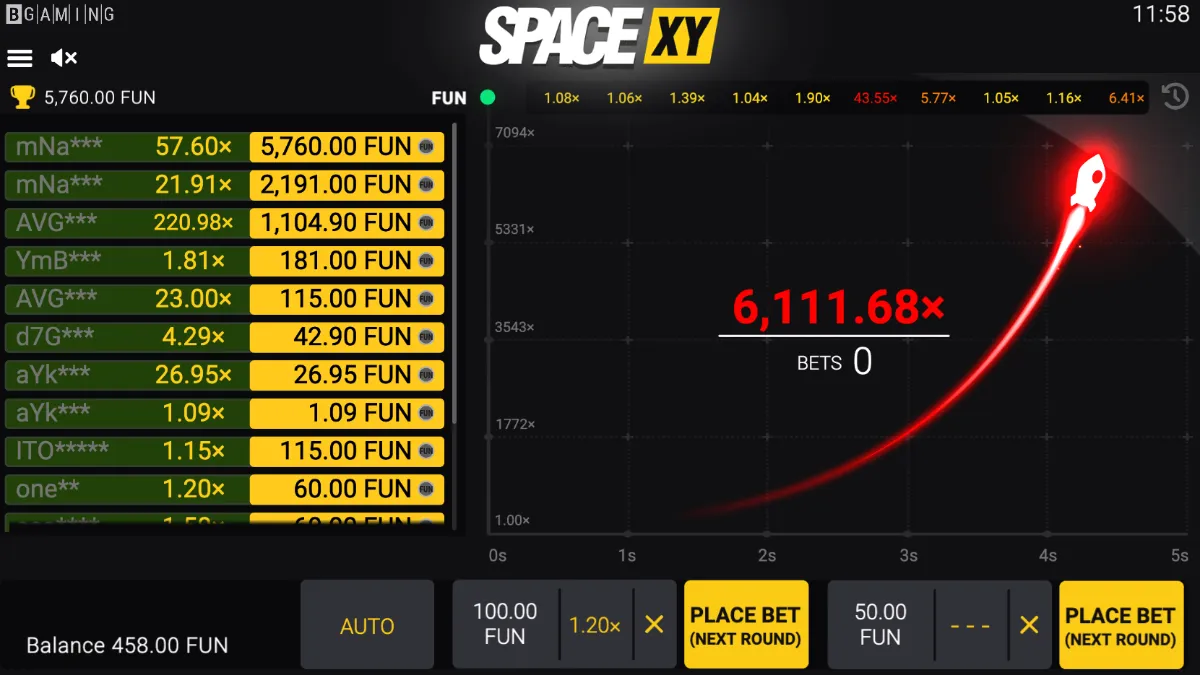
The main appeal of comparing Rocket scores is convenience. Instead of relying on memory, players can consult whatever records the game or casino provides. A clearly presented history may make it easier to review a session, understand how often a player chose to cash out at certain multipliers, and keep entertainment within a planned budget.
Clarity matters more than flashy rankings. A useful comparison screen should identify the relevant game, explain the period covered, and distinguish a personal record from a public competition result. If a leaderboard does not explain how scores are calculated, its rankings may be difficult to interpret. Players should also check whether names are public, whether participation is optional, and whether a result can be hidden or displayed under a nickname.
What players should verify
- Scoring rules: Find out whether the displayed value is a multiplier, a cash-out amount, points, or a tournament score.
- Time period: Check whether rankings reset daily, weekly, monthly, or only at the end of an event.
- Eligibility: Confirm whether all players can appear on the board or whether specific games, regions, or account types are involved.
- Privacy: Review the account settings and terms before sharing a username or performance history.
- Game rules: Read the provider’s official description for round mechanics, limits, and any special features.
These checks can prevent misunderstandings. A leaderboard position, for instance, may reflect a limited contest rather than a player’s overall performance. A large multiplier in one round is a record of that round, not evidence that the same result is likely to happen again.
How to compare results without overreading them
Players who want to use score tools constructively can focus on their own behavior rather than trying to predict the next Rocket launch. Pick a fixed session length and spending limit before starting. After the session, review the history and note whether the original limits were followed. The purpose is to understand personal habits, not to identify a guaranteed strategy.
A simple review routine
- Choose a maximum time and spend that you can comfortably afford to lose.
- Play only the Rocket game whose rules you have read and understood.
- Use the comparison feature to record results, if it is available and clearly explained.
- At the end of the planned session, stop and review the record rather than extending play to chase a better score.
Comparisons are more meaningful when the circumstances are similar. For example, looking at results from the same game and a similar session length may be easier to interpret than comparing scores across different Rocket titles or special events. Even then, the record describes past play only. It does not reveal a hidden pattern or remove the randomness of future rounds.
It is also sensible to treat public rankings as entertainment. Competing for a place on a board can encourage longer sessions or riskier decisions, particularly when a promotion is attached. Decide in advance whether participation is enjoyable for you. If it is not, ignore the ranking and use private records—or no records at all.
Questions and answers
Does a high score improve the chance of winning the next round?
No. A previous score does not establish what will happen in a later round. Rocket games involve uncertain outcomes, and a high-score display should not be treated as a prediction tool.
Can every Space XY player use the comparison features?
Availability can depend on the game, region, device, and current platform features. Check the game page and the casino’s terms for the options available to your account. If a leaderboard or history is not shown, do not assume it is available in another form.
What does a leaderboard score mean?
It depends on the specific game or contest. It may represent a multiplier, points, a cash-out result, or a score calculated under event rules. Look for the scoring explanation and competition period before comparing your result with another player’s.
Is it safe to share my Rocket results?
Only share information you are comfortable making public. Avoid posting account details, payment information, or identifying data. Check Space XY’s privacy settings and policies to understand how usernames and gameplay information are handled.
Responsible play and account checks
Online casino access and rules differ around the world. Before playing at Space XY, confirm that online gambling is permitted where you live and that you meet the applicable age requirement. Use the official site or app, review the terms for your location, and check payment and withdrawal conditions before depositing. This article does not verify the availability or legal status of Space XY in any particular country.
Set limits before you play, and do not treat a Rocket game as a way to earn income. Never borrow money to gamble or continue playing to recover losses. If score comparisons begin to affect your mood, spending, or time, step away and consider using available account limits, cooling-off tools, or self-exclusion options. Support services in your region may also provide confidential help.
Overall, Rocket Game High Score Comparison Tools can make it easier to review results and add a social or competitive element to play at Space XY. Their value comes from clear records and transparent rules—not from any ability to forecast outcomes. Players who verify how scores work, protect their privacy, and keep firm limits can use comparison features as a small part of a more informed and responsible casino experience.